Germany's Defense Buildup Is a Victory Worth Applauding for the United States

Summary
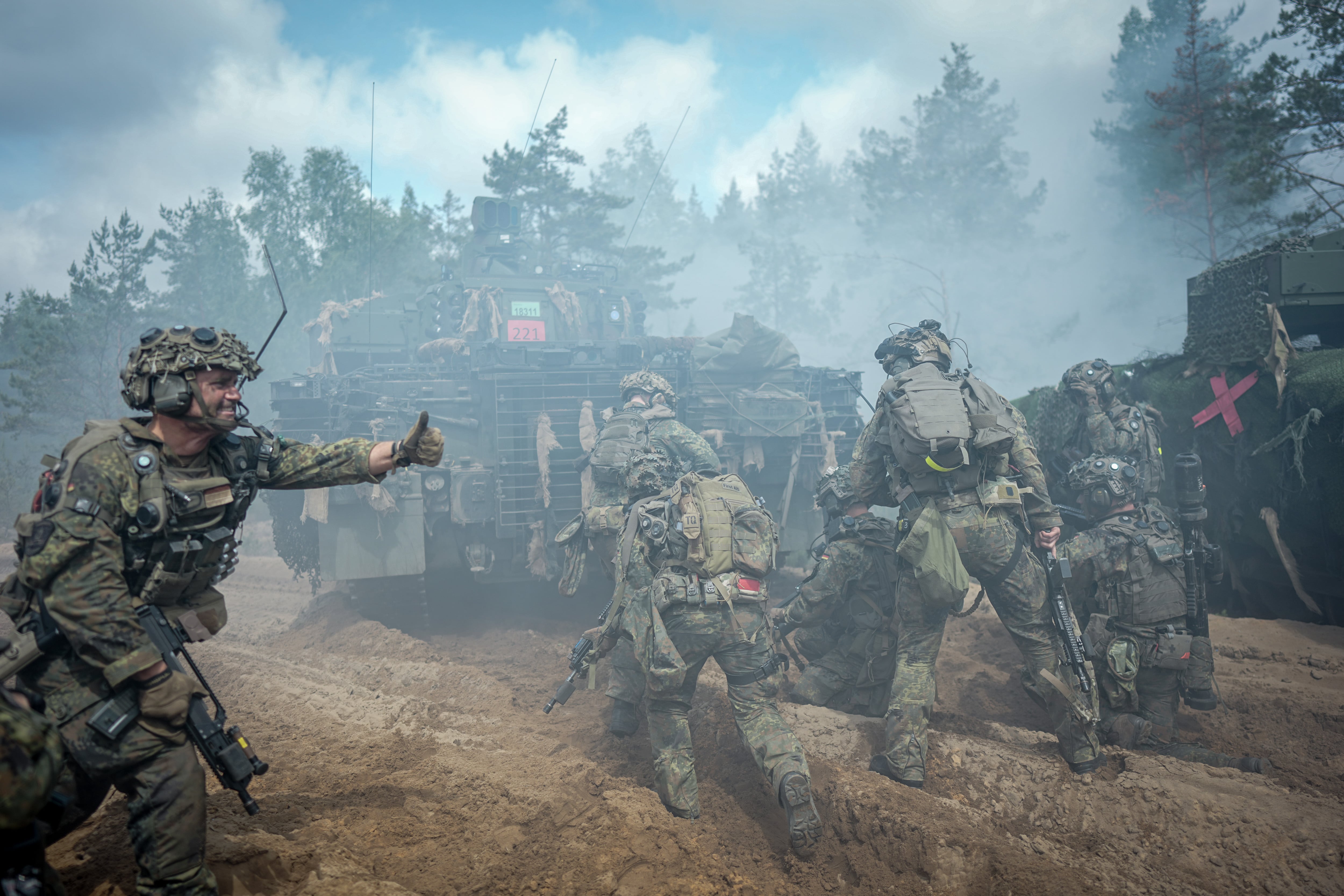
Germany has undergone a dramatic and rapid strategic transformation in its approach to defense, shifting from decades of military restraint and chronic underspending to becoming NATO's most consequential European member. Driven by Russia's invasion of Ukraine and pressure from the Trump administration, Berlin has committed to doubling its defense budget within four years, with spending projected to surpass 3% of GDP and targeting a minimum of 3.5% by 2035, backed by a landmark €100 billion special defense fund established in 2022. Germany's defense industrial base, anchored by major companies like Rheinmetall and TKMS, is forming joint ventures with American firms, strengthening transatlantic defense production and helping sustain alliance capacity for high-intensity conflict. Perhaps most symbolically significant, Germany has permanently stationed a combat brigade in Lithuania — its first forward-deployed combat forces in Europe since World War II — signaling a profound cultural shift from pacifism to active deterrence. The authors argue that as the United States faces growing threats from a coordinated "Axis of Aggressors" comprising China, Russia, Iran, and North Korea, Germany's willingness to match words with deeds makes it an indispensable and welcome partner for Washington.
Key Takeaways
- 1. Germany's defense spending has surged from 1.43% of GDP in 2021 to an estimated 2.69% in 2026, with plans to exceed 3.5% by 2035
- 2. The €100 billion special defense fund established in 2022 has accelerated German procurement across all combat domains, from air defense to cyber capabilities
- 3. German defense companies, particularly Rheinmetall, are pursuing co-production arrangements with U.S. firms, mutually strengthening both nations' defense industrial bases
- 4. Germany's permanent stationing of the 45th Armored Brigade in Lithuania marks a historic cultural and strategic shift, reassuring Baltic states and Poland of German commitment to NATO's eastern flank
- 5. Amid growing coordinated threats from China, Russia, Iran, and North Korea, Germany's expanded defense role is critical to sharing the security burden and reinforcing transatlantic unity